
Indiana
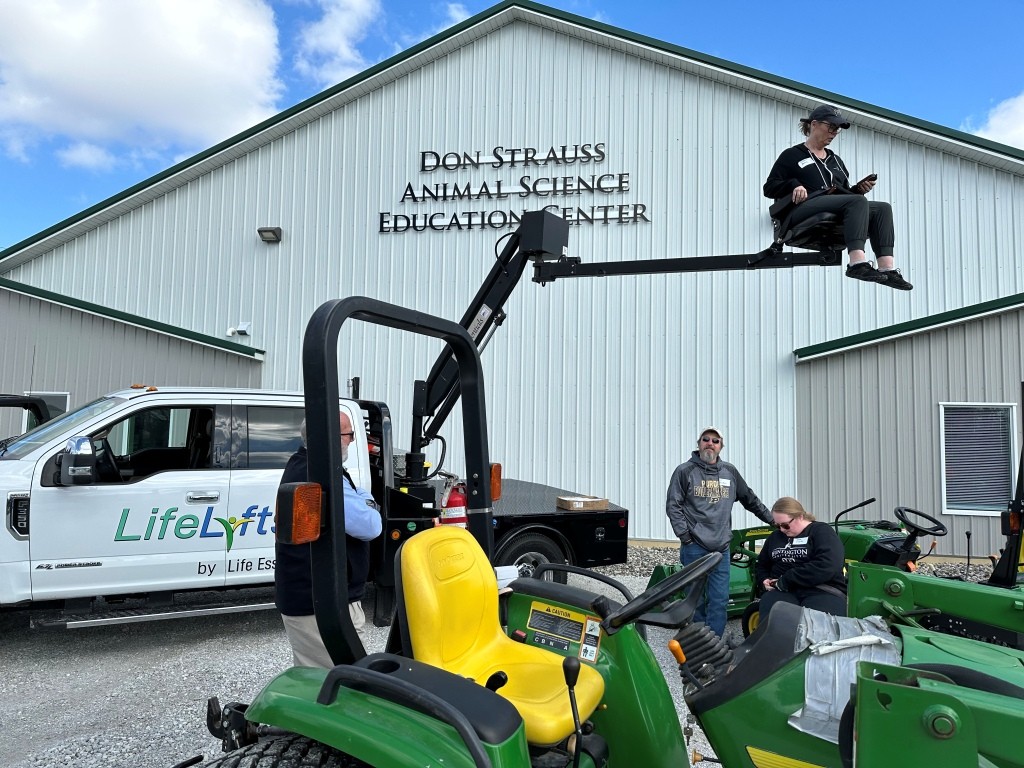
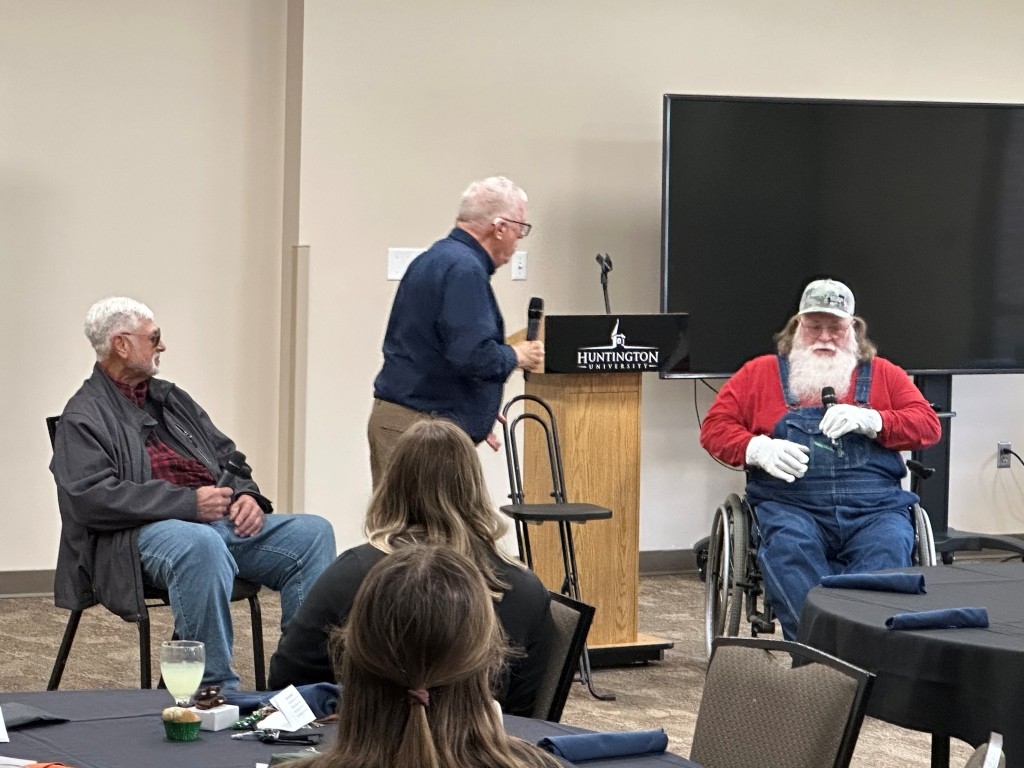 It was a beautiful spring day on April 11 at the campus of Huntington University, where Indiana AgrAbility, in collaboration with Easterseals Crossroads and Huntington University, hosted a hands-on event focused on using assistive technology in agriculture. The day brought together students from Huntington University's occupational therapy programs, local farmers, Extension staff, occupational therapists, and others for an immersive learning experience.
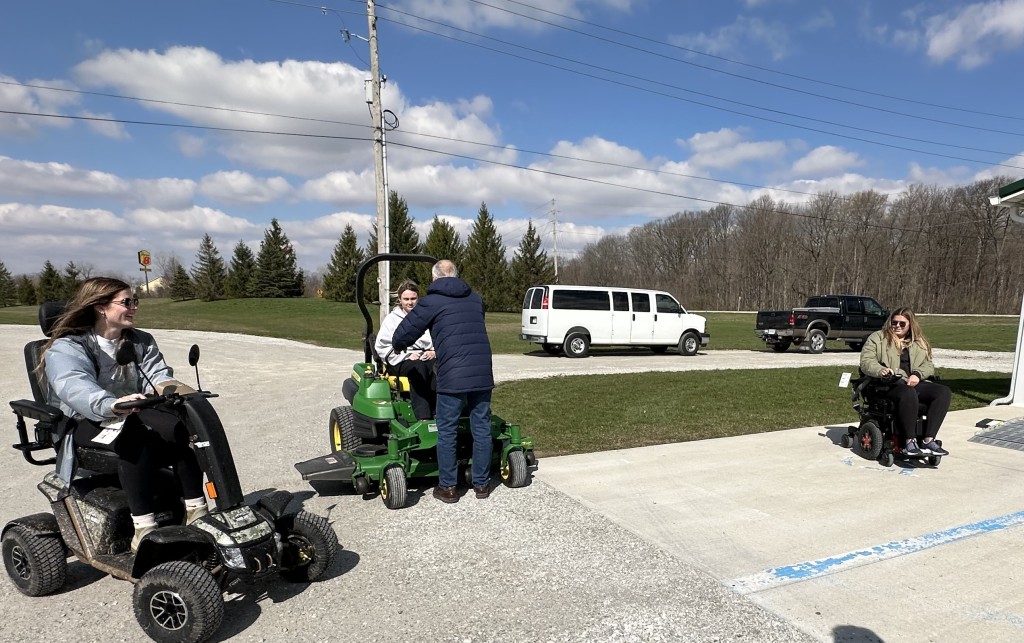
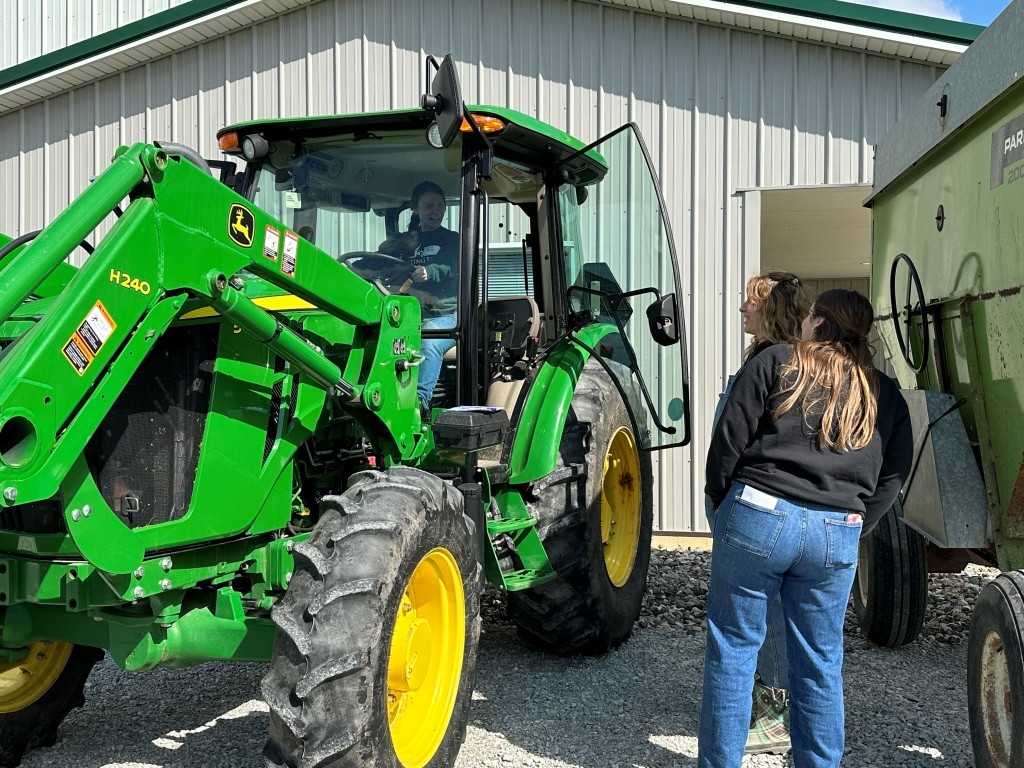 Participants engaged in a variety of activities involving assistive equipment used on farms. They drove utility vehicles, lawn mowers, and mobility scooters-gaining first-hand experience with the tools and skills necessary for individuals with disabilities to manage farm-related tasks.
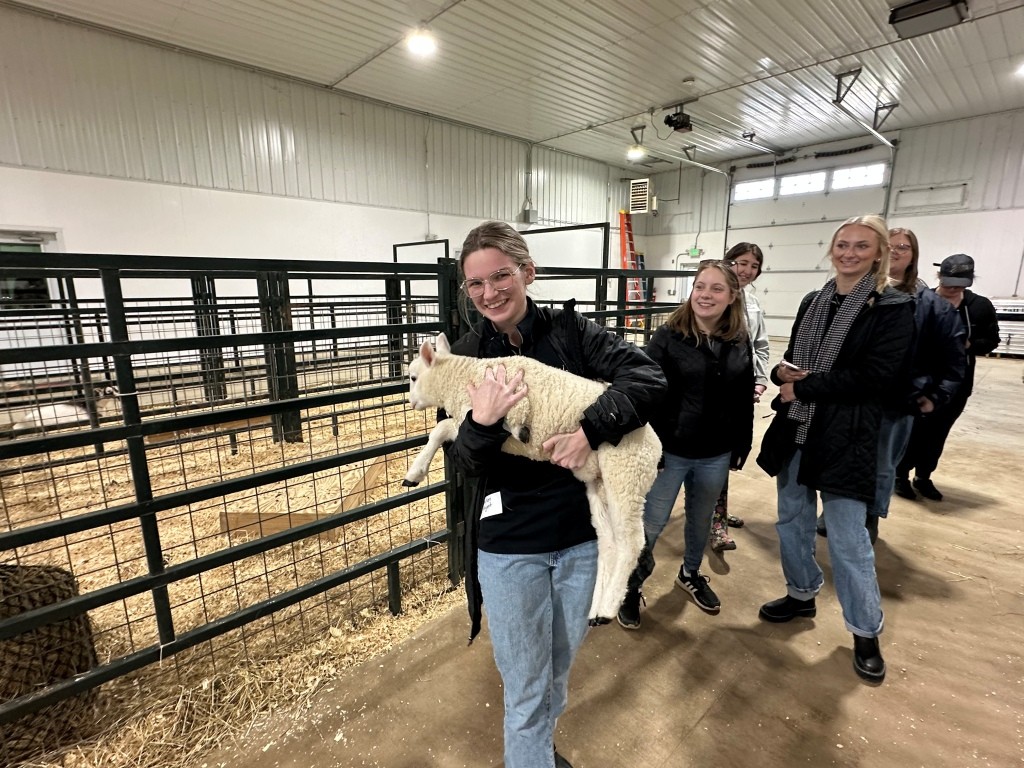
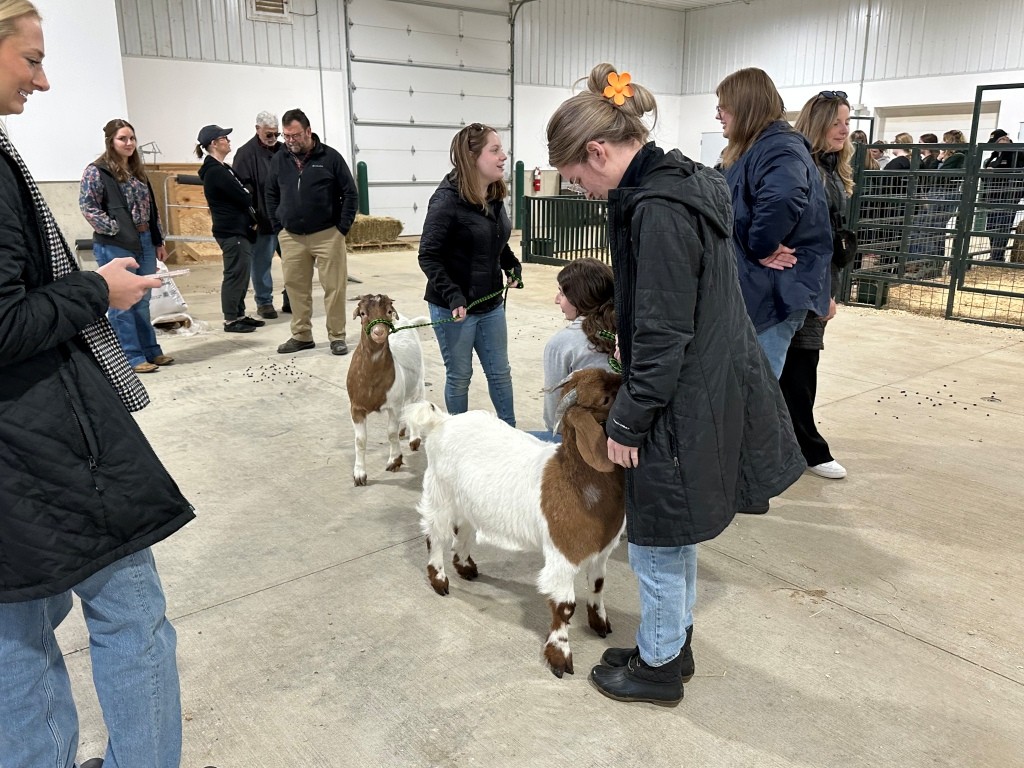 For many, it was their first time in a working farm environment or interacting closely with livestock. Climbing into a tractor cab, for example, helped illustrate the physical demands of farm work and the additional barriers faced by individuals with mobility challenges. Through direct experience, attendees were able to better understand the importance of accessible design and adaptive techniques in agricultural settings.
Submitted by Lisa Becker
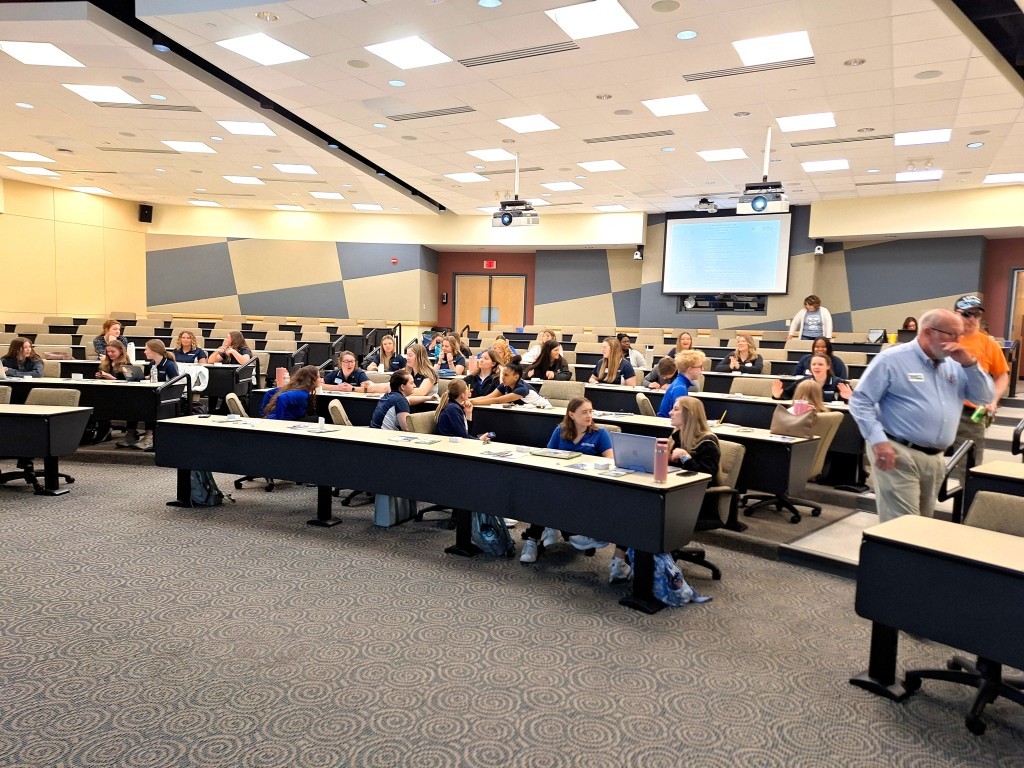 Chuck Baldwin, Indiana AgrAbility, Marty Cotterman from LifeLyfts by Life Essentials, and Sgt. Matthew Harvey, farmer veteran and AgrAbility client, conducted a three-hour "AT in Agriculture" training for 40 occupational therapy (OT) students and a few staff at Indiana State University (ISU) in Terre Haute on April 18. The first hour was spent in a classroom setting giving an intro to AgrAbility and how AgrAbility and OTs can best work together to serve the agricultural community, an intro to the work of LifeLyfts, and commentary on the work of AgrAbility and LifeLyfts from a client's perspective.
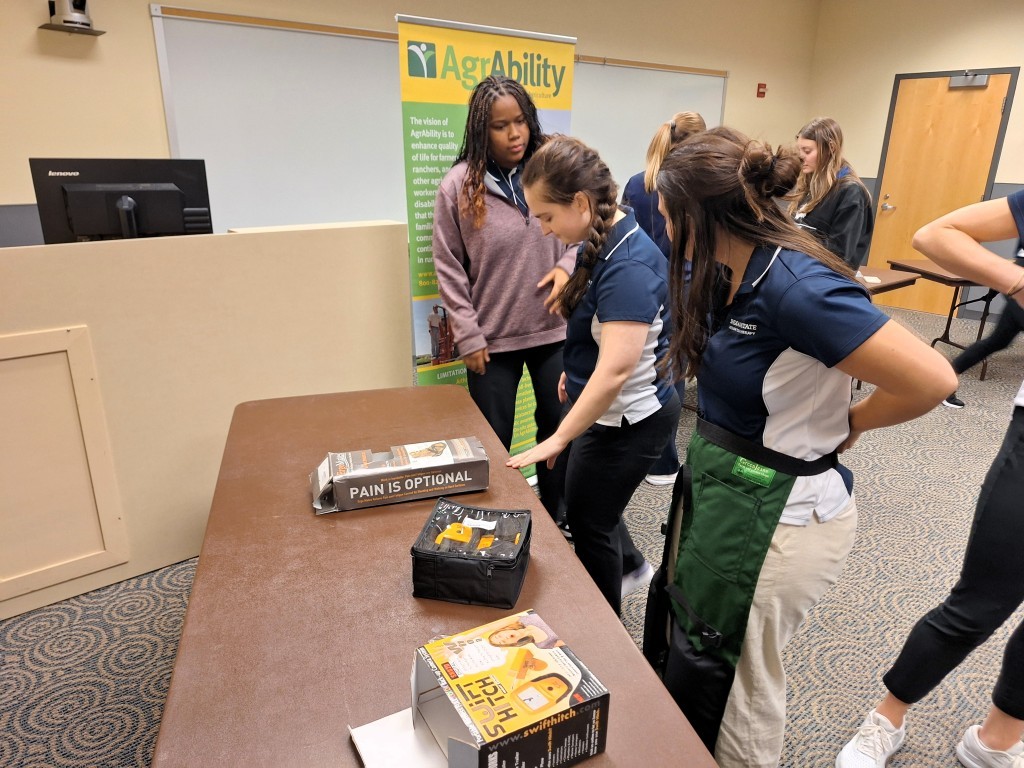
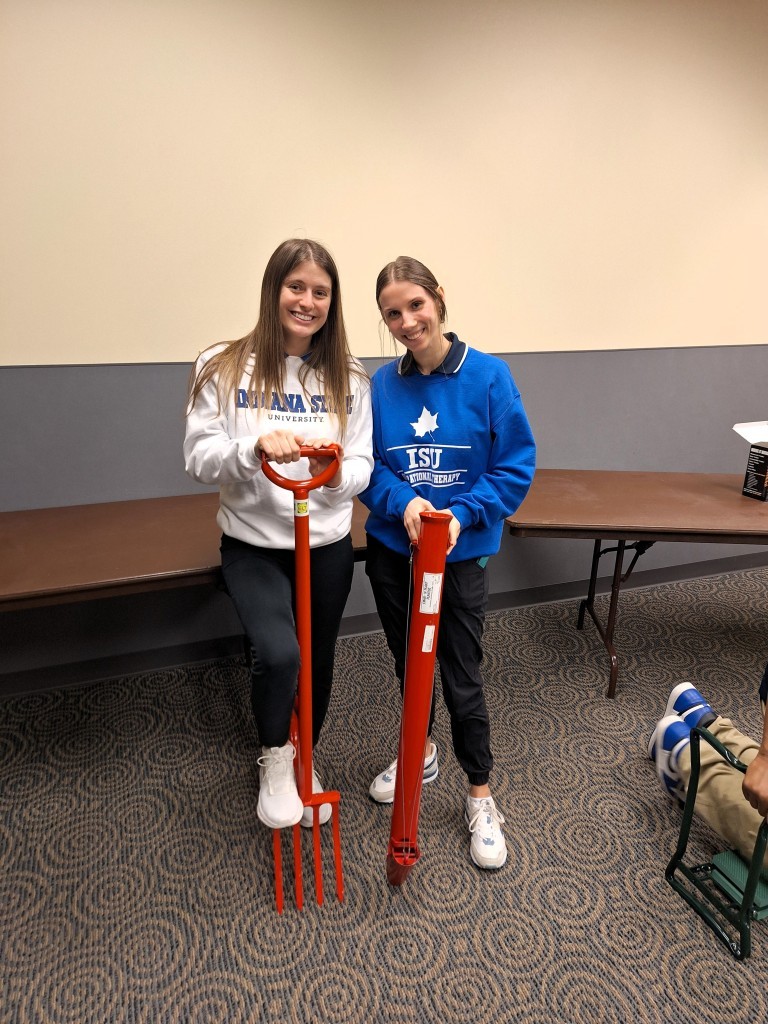 All the students were then divided into three groups that rotated every 40 minutes between the outdoor AT station with Marty and Matthew, the indoor AT hands-on display with Chuck, and a station staffed by Rural Health Innovation Collaborative (RHIC) personnel and ISU staff that simulated different health fair situations and challenged the students to come up with solutions for the challenges posed.
Following the hands-on activities, lunch was served, and the group spent 30 minutes together in a debriefing session, sharing what they had learned, asking questions, and making suggestions. The OT students expressed excited affirmation about the time spent focusing on agriculture and the role they could eventually play in keeping farmers and ranchers with disabilities working productively in their occupations. The ISU staff voiced interest in conducting similar trainings on a regular basis in years to come.
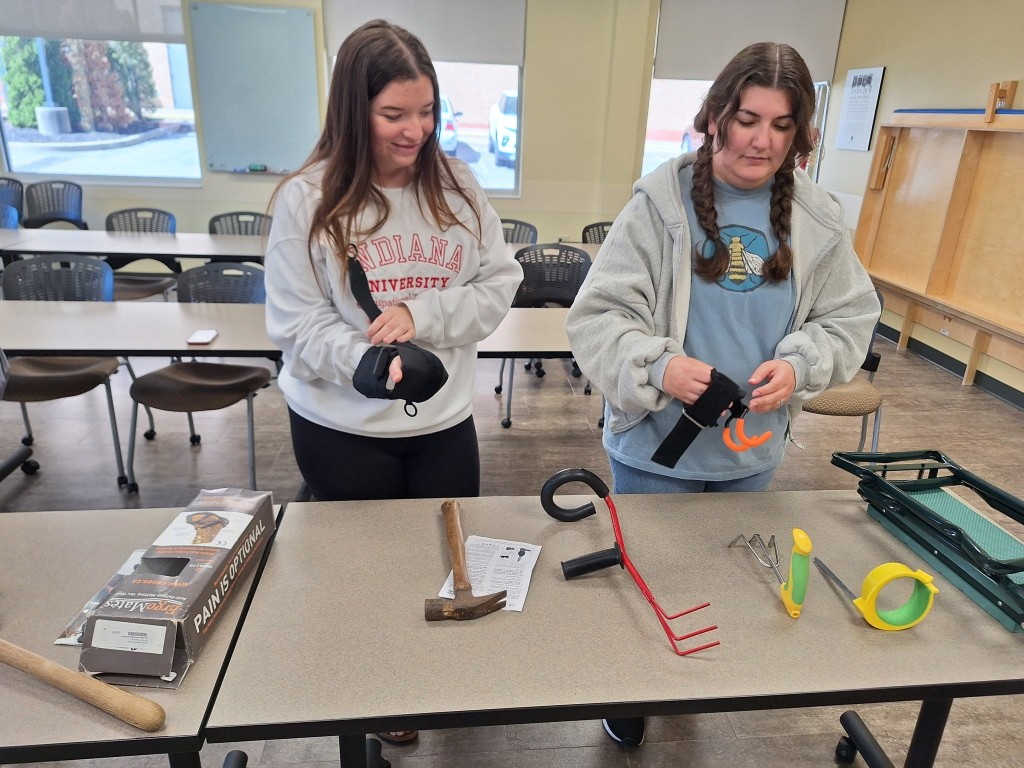 The OT training program at Indiana University South Bend (IUSB) invited Indiana AgrAbility and LifeLyfts for the second year in a row to train its senior OT students at its Elkhart, IN, facility on April 30. Chuck Baldwin and Marty Cotterman did a three-hour training in much the same fashion as the training at ISU in Terre Haute 12 days earlier.
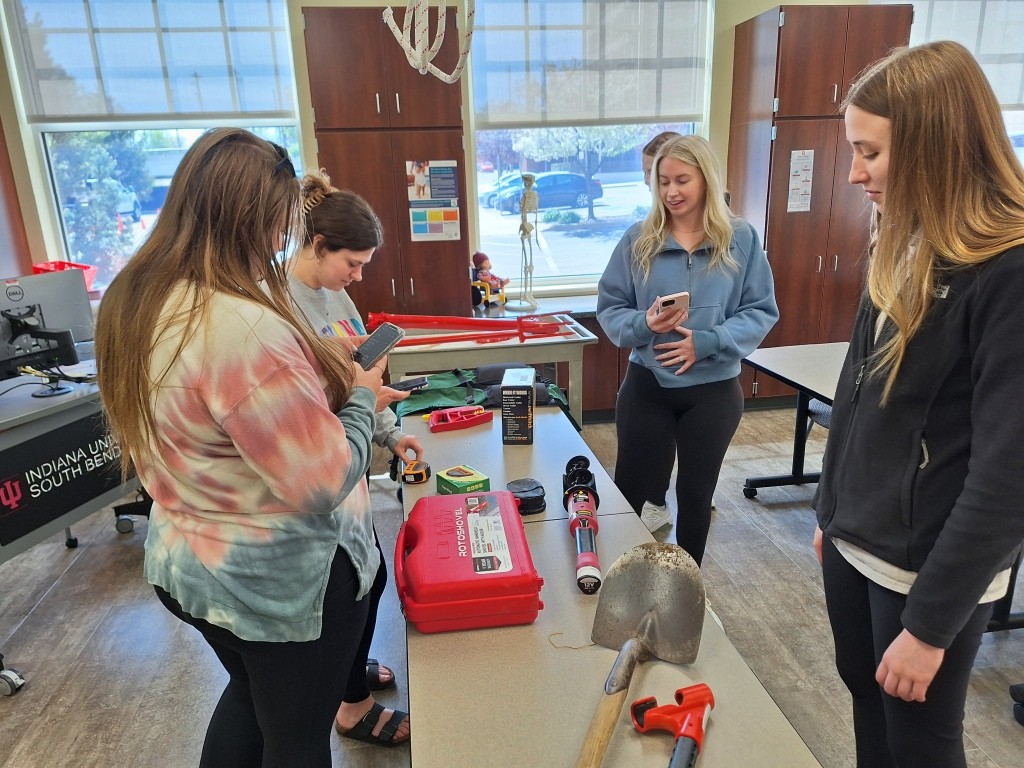 Once again, the enthusiasm of the OT students and their professors to learn new things about how they could interact with agricultural workers, learn hands-on about various assistive technologies used in agriculture, and use LifeLyfts and AgrAbility as resources and partners in their own work was on full display. Both Marty and Chuck remarked about how much fun it is to work with such students whose interest is obvious and who all want to personally try out every piece of AT available.
Submitted by Chuck Baldwin